Gallery
Every example that ships with the package, each one a complete standalone document. The pictures on the other pages are drawn by these, and this is where their source lives.
They compile against the published package by its exact version, the way the Typst Universe linter asks an example to. Four of the six stand on their own; the two vertical ones import the arguments their horizontal sibling declares and override the orientation, that being the whole of the difference between the two pictures.
gorgeous.typ
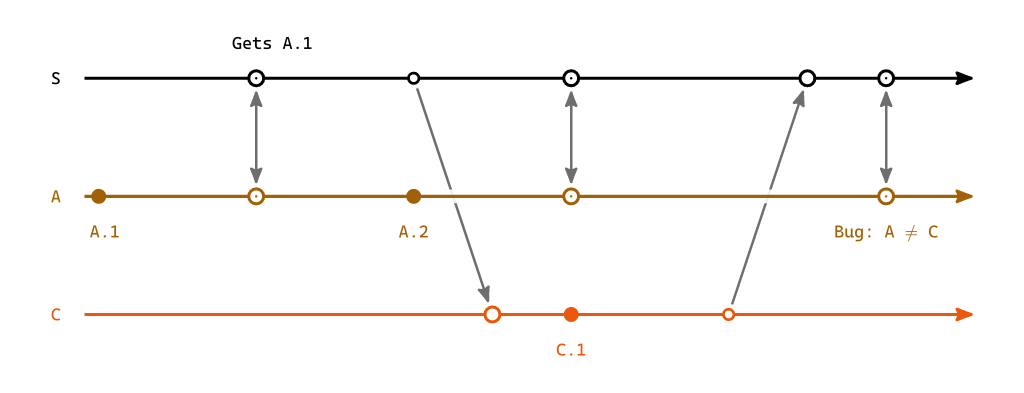
Three replicas, two-way exchanges, a one-way message and a label saying what went wrong. It is the diagram the front page leads with, and the one whose code is printed there.
vertical.typ
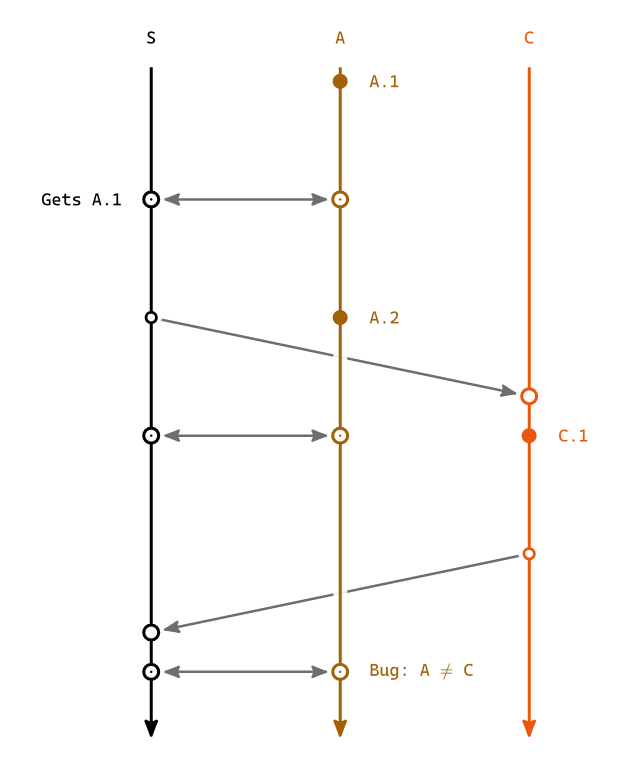
The same scenario under orientation: vertical, and nothing else changed – the arguments are
the ones gorgeous.typ declares:
#import "gorgeous.typ": diagram

#lamport-diagram(..diagram, orientation: vertical)
The timelines lay out as columns, the replicas stack rightwards, and the label sides that the
horizontal diagram names are dropped back to the side a vertical lane has room for, rather than
having to be restated. See orientation.
overlays.typ
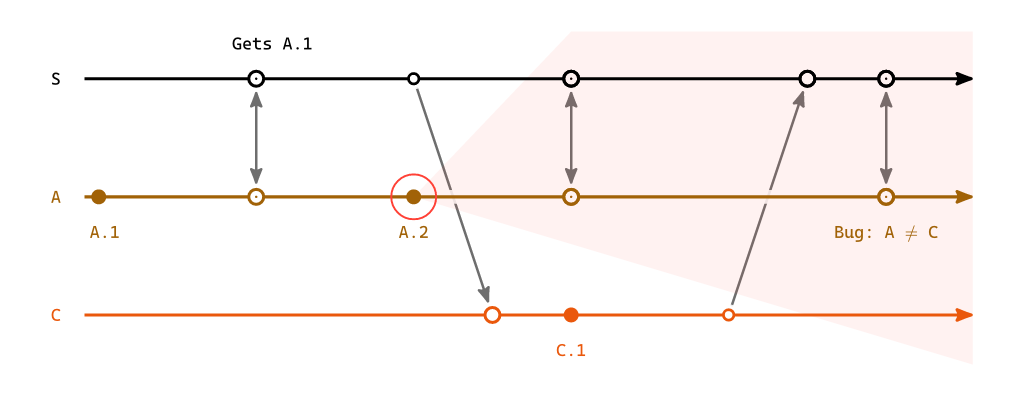
The future cone of A.2, drawn at backdrops so the lanes cross it without fading a stripe
through it, and a ring at marks so A.2’s own label stays legible over it. The
overlays page walks through the whole of it.
vertical-overlays.typ
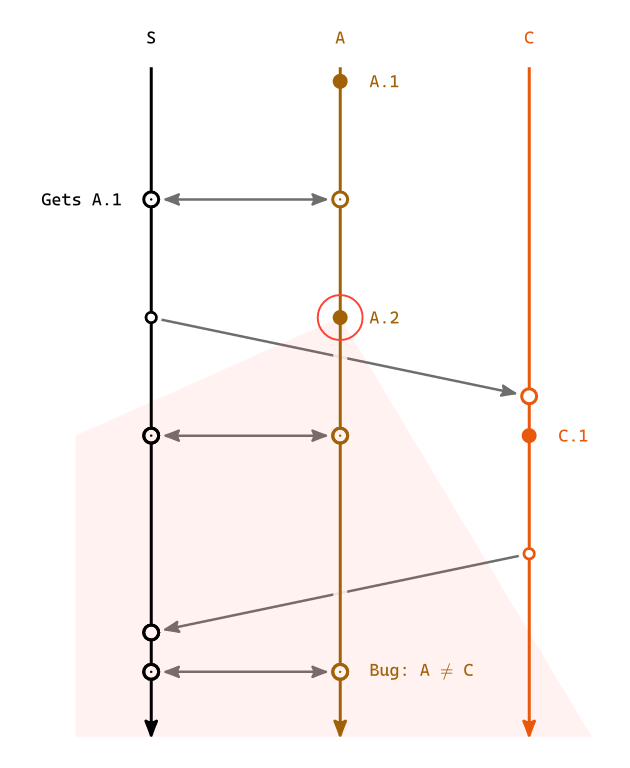
The same cone in a vertical diagram, imported from overlays.typ the same way – the overlay
included. The drawing is written in columns and lanes rather than in page coordinates, so it turns
with the diagram instead of being redrawn for it, which is the point of staying
orientation-independent.
legend.typ
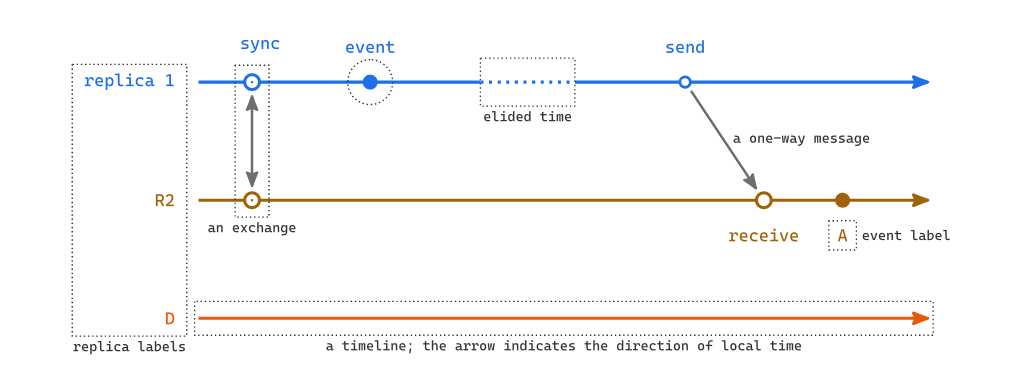
Every part of a diagram named, each with a rectangle from the locator round it – or a ring built out
of mark and dot – and a note hung off that. The callouts are drawn at foreground, so
they read over the whole diagram; the rings at marks, so each dot’s own label stays legible over
the ring round it. It is the picture the guide opens on.
locators.typ
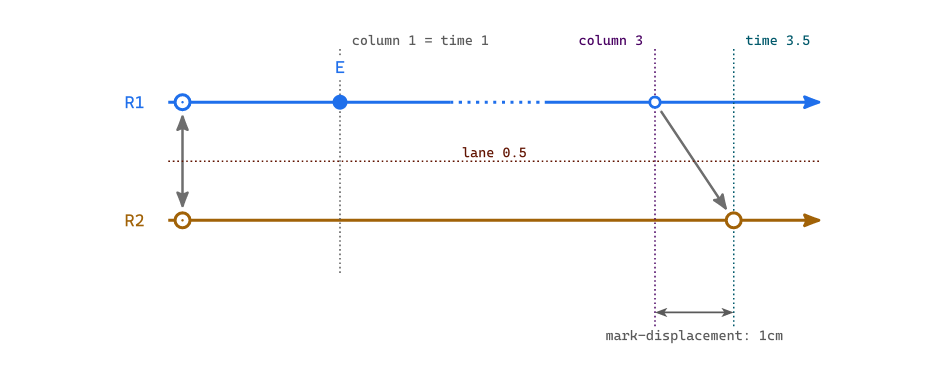
Dotted guides at a column, at a time and along a lane, with the gap between a message’s column and the time its receiving end was drawn at measured out. It draws the kinds of value a locator answers in.